
Let me be honest with you. Six months ago, I thought "AI agents" was just another buzzword — one of those tech terms that sounds impressive in a LinkedIn post but doesn't really mean anything in the real world. I'd heard it thrown around at conferences, seen it in press releases, and dismissed it the same way I dismissed NFTs and the metaverse.
Then I watched an AI agent book a flight, summarize my unread emails, write and send a follow-up to a client, and fix a bug in my website — all while I was making coffee. That's when I realized: this isn't a buzzword. This is the actual shift everyone was too impatient to wait for.
Welcome to 2026 — the year AI stopped assisting us and started acting for us. And whether you're ready or not, AI agents are already reshaping how we work, build, and compete.
TL;DR — Key Takeaways
- AI agents go beyond chatbots — they plan, act, and complete tasks autonomously
- The global AI agents market hit $10.9 billion in 2026 and is projected to reach $182 billion by 2033
- Real tools like Claude Code, ChatGPT Agent, Devin, and Perplexity are already in daily use
- Agentic AI is the biggest productivity revolution since the smartphone — and you can use it today
- This guide covers everything: what they are, how they work, the best ones, and what's coming
📋 What's In This Guide
- What Exactly Is an AI Agent? (Not What You Think)
- Agentic AI vs Regular AI — The Real Difference
- Why 2026 Is the Turning Point
- The Best AI Agents in 2026 — Full Breakdown
- Real-World Use Cases That Will Blow Your Mind
- Pros, Cons & What Nobody Tells You
- How to Start Using AI Agents Today
- What's Coming Next — The 2027 Preview
- FAQ — Your Questions Answered
1. What Exactly Is an AI Agent? (Not What You Think)
Here's how most people explain AI agents: "It's like ChatGPT but it can do things." That's... technically true but completely misses the point. Let me give you a better picture.
Think about the difference between a taxi and a self-driving car. A taxi driver (regular AI chatbot) takes you where you ask. But a self-driving car (AI agent) figures out the route, watches traffic in real time, reroutes if there's a jam, parallel parks itself, and gets you there — without you touching the wheel.
An AI agent is an AI system that can:
|
🧠 Perceive Read emails, browse websites, see your screen, understand your environment |
📋 Plan Break complex goals into steps, prioritize tasks, create a strategy |
⚡ Act Click buttons, write code, send emails, search the web — without asking you each time |
The key word is autonomy. A chatbot waits for your next message. An agent keeps going. It finishes the job, even when you've walked away from your computer.

2. Agentic AI vs Regular AI — The Real Difference
I've seen so many people confuse "AI with tools" and "agentic AI." They're not the same. And the difference matters — a lot.
| Feature | Regular AI (Chatbot) | Agentic AI (Agent) |
|---|---|---|
| Interaction Style | Responds to each message | Acts on goals without step-by-step prompting |
| Memory | Within one conversation | Persistent memory across sessions |
| Tool Use | Limited or none | Searches, codes, clicks, emails, browses |
| Multi-step Tasks | Needs hand-holding each step | Handles the entire workflow end-to-end |
| Best Analogy | A smart colleague you ask questions | A full-time employee who gets things done |
The moment an AI can decide on its own what to do next — that's when it crosses the line from tool to agent. And that line has now been crossed at scale.
3. Why 2026 Is the Turning Point
I want you to feel the weight of these numbers. Not just skim them — actually absorb what they mean.
|
$10.9B AI agents market value in 2026 (up from $7.6B in 2025) |
40% Of enterprise apps will have embedded AI agents by end of 2026 — up from 5% in 2024 (Gartner) |
51% Of companies have already deployed at least one AI agent in production |
$182B Projected market size by 2033 at 49.6% CAGR (Grand View Research) |
"The ChatGPT moment for robotics and autonomous agents is here. We're not talking about demos anymore — we're talking about deployment."
— Jensen Huang, CEO of NVIDIA, CES 2026
What changed? Three things happened at once in late 2025 that nobody predicted would all converge together:
- Models got good enough to reason reliably — not just answer questions, but actually plan and recover from errors mid-task.
- Tool integration matured — agents can now actually control browsers, write and run code, send emails, and call APIs out of the box.
- Memory systems arrived — agents can now remember context across days and weeks, not just within a single chat window.
The result? Something that actually works. Not just a party trick. Not just a demo. Something that saves real hours for real people doing real work.

4. The Best AI Agents in 2026 — Full Breakdown
Okay, let's get practical. Here's an honest look at the top AI agents available right now. I've tested or researched each of these — no sponsored opinions here, just what actually works and for whom.
|
🤖
|
Claude Code (Anthropic) Best for: Developers & Power Users Claude Code lives in your terminal and actually understands your entire codebase. It can write features, fix bugs across multiple files, run tests, and commit changes — all without you watching. Teams at TELUS used it to ship code 30% faster while saving over 500,000 hours of engineer time. That's not a marketing claim — that's a published case study.
Pricing: Included with Claude Pro ($20/mo) and Max ($100/mo) plans |
|
💬
|
ChatGPT Agent (OpenAI) Best for: General tasks, web browsing, everyday automation The successor to Operator, ChatGPT Agent can browse the web, fill forms, book appointments, and complete multi-step workflows in the browser. It's the most accessible agent for non-technical users and comes included with ChatGPT Plus ($20/month). The vision-action loop is smart — it can see your screen and adapt on the fly.
Pricing: ChatGPT Plus $20/mo (limited), Pro $200/mo (full access) |
|
👨💻
|
Devin (Cognition AI) Best for: Autonomous software engineering Devin is what happens when you give AI a full developer environment. It takes a task, opens a terminal, writes code, runs tests, debugs failures, and submits a pull request — entirely on its own. It's not a coding assistant. It's closer to a junior developer that never sleeps, never complains, and works 24 hours straight. The use case is clear: repetitive engineering tasks that don't need creative architecture decisions.
Pricing: Team plans from ~$500/month |
|
🔍
|
Perplexity AI (Deep Research Mode) Best for: Research, journalism, content creation Give Perplexity a complex research question and walk away. It searches dozens of sources, reads them, cross-references the data, and delivers a cited report — in minutes. I used it recently to research a competitor landscape analysis that would have taken me three hours. It was done in 11 minutes and was honestly better sourced than what I'd have done manually. For writers, researchers, and analysts, this is the agent that pays for itself fastest.
Pricing: Free tier available, Pro $20/month |
|
✨
|
Gemini Spark (Google) Best for: 24/7 cloud-based autonomous work + Google Workspace users Launched at Google I/O in May 2026, Gemini Spark is the first true 24/7 cloud-resident AI agent — it keeps working even when your laptop is closed. Deep integration with Gmail, Drive, Calendar, and Docs makes it the obvious choice for anyone already living inside Google's ecosystem. It's genuinely scary how much it can do while you're asleep.
Pricing: Google One AI Premium $19.99/month |
5. Real-World Use Cases That Will Blow Your Mind
Forget the theory. Here's what AI agents are actually doing for people right now in 2026 — in industries you'd recognize.
|
🏢 Customer Service AI agents at major banks and telecoms now handle 40–60% of all customer service interactions — not by reading from scripts, but by actually resolving issues. They check account status, issue refunds, update addresses, and escalate to humans only when it gets genuinely complicated. Conversational AI is on track to save $80 billion in contact-center labor costs by the end of 2026. |
💻 Software Development Engineers at companies like Rakuten are using Claude Code to implement complex features inside million-line codebases. The agent reads the existing code, figures out where the change goes, implements it, writes tests, and documents it — all in one shot. Engineers report completing tasks 25–40% faster, which at enterprise scale translates into millions saved annually. |
|
🏥 Healthcare Hospital systems are deploying agents for prior authorizations, appointment scheduling, and medical record summarization. What used to take a nurse 45 minutes now takes an agent 3 minutes. Doctors are using agents to synthesize patient history before consultations — showing up to appointments already knowing the full picture. |
🛒 E-Commerce Agents are now managing entire product catalog updates, writing SEO descriptions, responding to reviews, and even adjusting pricing based on competitor data. One mid-size e-commerce brand publicly reported using Zapier AI Agents to automate 73% of their operations team's manual tasks — with zero additional headcount. |

6. The Honest Pros & Cons Nobody Talks About
I'm not here to sell you on AI agents. I'm here to tell you the truth. So here's both sides of it, without the PR spin.
|
✅ What's Genuinely Great
|
❌ What Still Needs Work
|
⚠️ Important Reality Check
79% of enterprises have adopted AI agents in some form, but only 11% are running them in production. That 68-percentage-point gap tells you everything about where we still are. The technology works — but building the processes, data infrastructure, and oversight around it is the actual hard part. Don't let a demo fool you into thinking deployment is easy.
7. How to Start Using AI Agents Today — No Hype, Just Steps
You don't need a dev team. You don't need a big budget. Here's a realistic starting path for most people in 2026.
|
1
|
Start with Perplexity Deep Research (Free/Cheap) Pick one research task you do regularly. Let Perplexity handle it. See how much time you save. This builds trust in agents before you hand them anything sensitive. |
|
2
|
Try ChatGPT Agent for Everyday Tasks ($20/month) Give it one genuinely annoying task — booking a recurring calendar hold, summarizing your inbox, filling out a form you dread. Experience what it means for an agent to actually complete something. |
|
3
|
For Developers: Install Claude Code If you write code, Claude Code changes your life. Start with one well-scoped feature — not your entire codebase. Get comfortable with how it works before you let it touch anything mission-critical. |
|
4
|
For Business Automation: Look at Zapier AI or Lindy No code required. If you have repetitive workflows — lead routing, data entry, email follow-ups — Zapier AI Agents and Lindy connect to 5,000+ apps and can automate entire pipelines without a single line of code. |
8. What's Coming Next — A 2027 Preview
If 2026 is the year of deployment, 2027 is the year of trust. Here's where things are clearly heading — and it's genuinely exciting, if a little daunting.
- Multi-agent systems everywhere — Instead of one agent per task, coordinated swarms of specialized agents will handle entire business functions. Think a dozen agents handling your entire marketing pipeline — research, writing, scheduling, analytics, and reporting — all synced.
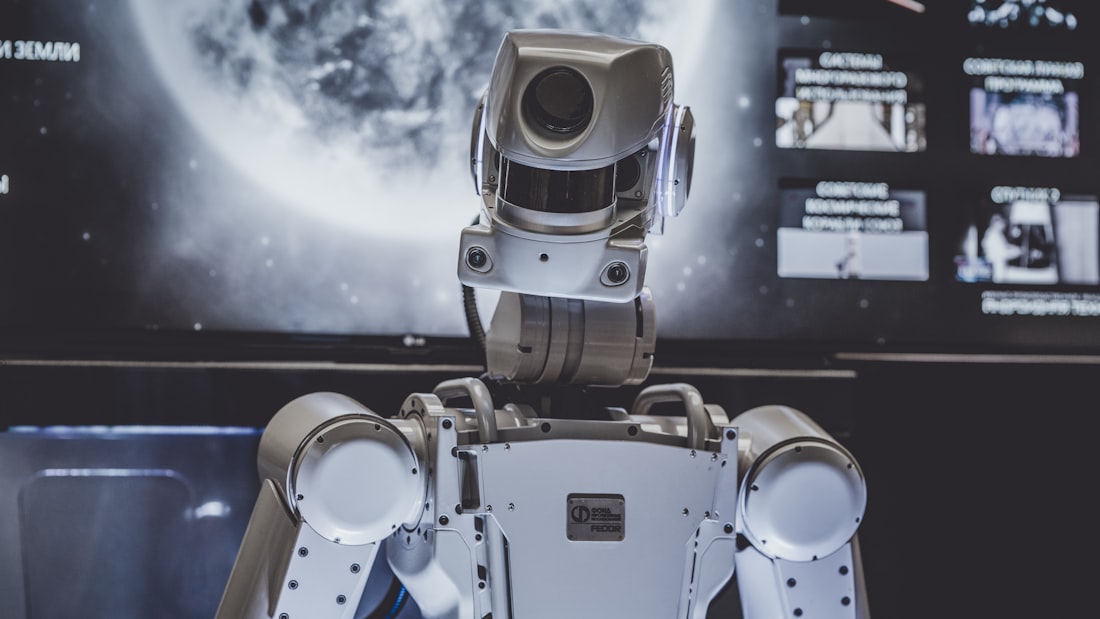
- Physical AI going mainstream — The same agentic AI principles are moving into robots. Boston Dynamics, Figure, Tesla Optimus — they're not demos anymore. The "ChatGPT moment for robotics" Jensen Huang predicted is arriving in warehouses and factories.
- Agentic browsers replacing manual web use — By 2027, most repetitive web tasks (comparison shopping, form filling, research) will be handled by agents on your behalf before you even open a browser tab.
- Agent-to-agent economy — This is the one I can barely wrap my head around: AI agents will start hiring other AI agents, paying each other with micro-transactions, and completing complex projects entirely without human involvement. The infrastructure for this is being built now.
9. FAQ — Your Questions, Actually Answered
The Bottom Line
I started this article by telling you I dismissed AI agents six months ago. I want to end it by being clear about where I am now.
I'm not worried about AI replacing me. I'm more worried about falling behind the people who are already using these tools every single day — getting more done, faster, with less stress — while I sit here debating whether to start.
The most honest thing I can tell you about 2026: the biggest risk isn't adopting AI agents too early. It's waiting so long that the gap becomes unclosable.
Pick one agent. Pick one annoying task. Let it run. Then decide.
"We're not competing against AI. We're competing against the people who know how to use it better than us."
— The honest summary of 2026
|
R
|
Razzak Tech Writer & AI Researcher Writing about AI, emerging tech, and what it actually means for real people — not just the industry insiders. If it's new, changing fast, and matters to you, it's what I cover. Follow along for the no-fluff breakdown every week. |
Tags
AI Agents Agentic AI AI 2026 Claude Code ChatGPT Agent Future of Work Tech News
Comments
Post a Comment