Breaking Science 2026 March–April 2026 ⏰ 14 min read Neuroscience & Future Tech
They Copied a Real Brain Into a Computer. It Woke Up and Walked.
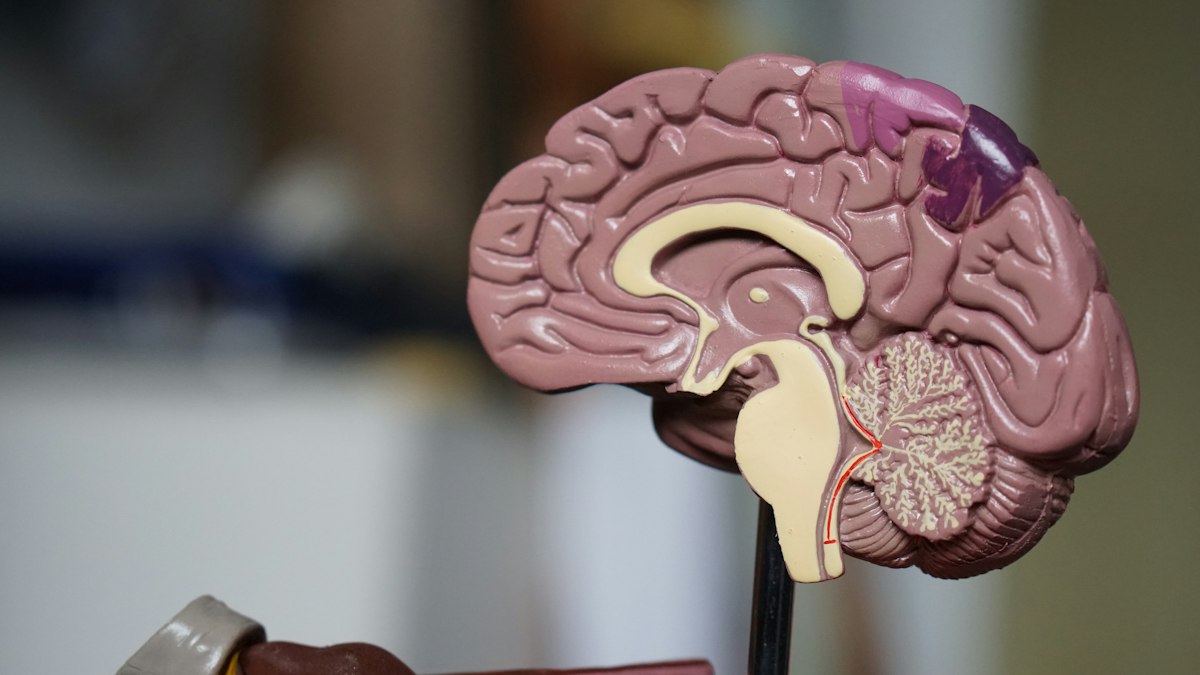
The Singularity was always supposed to belong to artificial minds. Not anymore.
The Day the Brain Woke Up
Picture a tiny room. No windows. No light. Servers humming. And inside those servers, something no human has ever witnessed before: a biological mind — a real one, copied from a living creature — opening its eyes for the first time in a world made entirely of numbers.
It didn’t receive instructions. It wasn’t trained. Nobody wrote code to make it walk, or groom, or search for food. It simply did those things. Because that’s what its wiring told it to do. Because that’s what a brain does when you give it a body and a world to inhabit.
On March 7, 2026, a San Francisco startup called Eon Systems PBC released a video that stopped the internet cold. In it, a tiny insect — a fruit fly that never existed in nature — scurries across a digital floor. It stretches its legs. It rubs its front feet together. It extends its mouthpiece and drinks from a simulated pool of food. Then it stops, grooms itself methodically, and moves on.
No animator drew those movements. No programmer scripted them. No AI learned them from videos. What was driving that simulated body was a digital copy of a real, biological fruit fly brain — every single neuron, every single synapse, reconstructed from an actual animal and run inside a computer exactly as nature built it.
This is the story of what they did, why it matters more than almost anything happening in science right now, and why the question it raises — is this alive? — may be the most important question your generation ever has to answer.
The Breakthrough: How You Copy a Brain
To understand why this is extraordinary, you first need to understand what Eon Systems actually built. Because it is easy to hear “brain simulation” and think of the AI chatbots and neural networks you already know. This is something fundamentally different. This is not a system trained to behave like a brain. It is a brain — digitized.
Step One: The Connectome — The Wiring Diagram of Life
Every brain is, at its core, a wiring diagram. Neurons connected to other neurons by synapses, firing signals in patterns so complex and so specific that they produce thought, memory, hunger, fear, and awareness. That diagram — the complete map of every neural connection in a brain — is called a connectome.
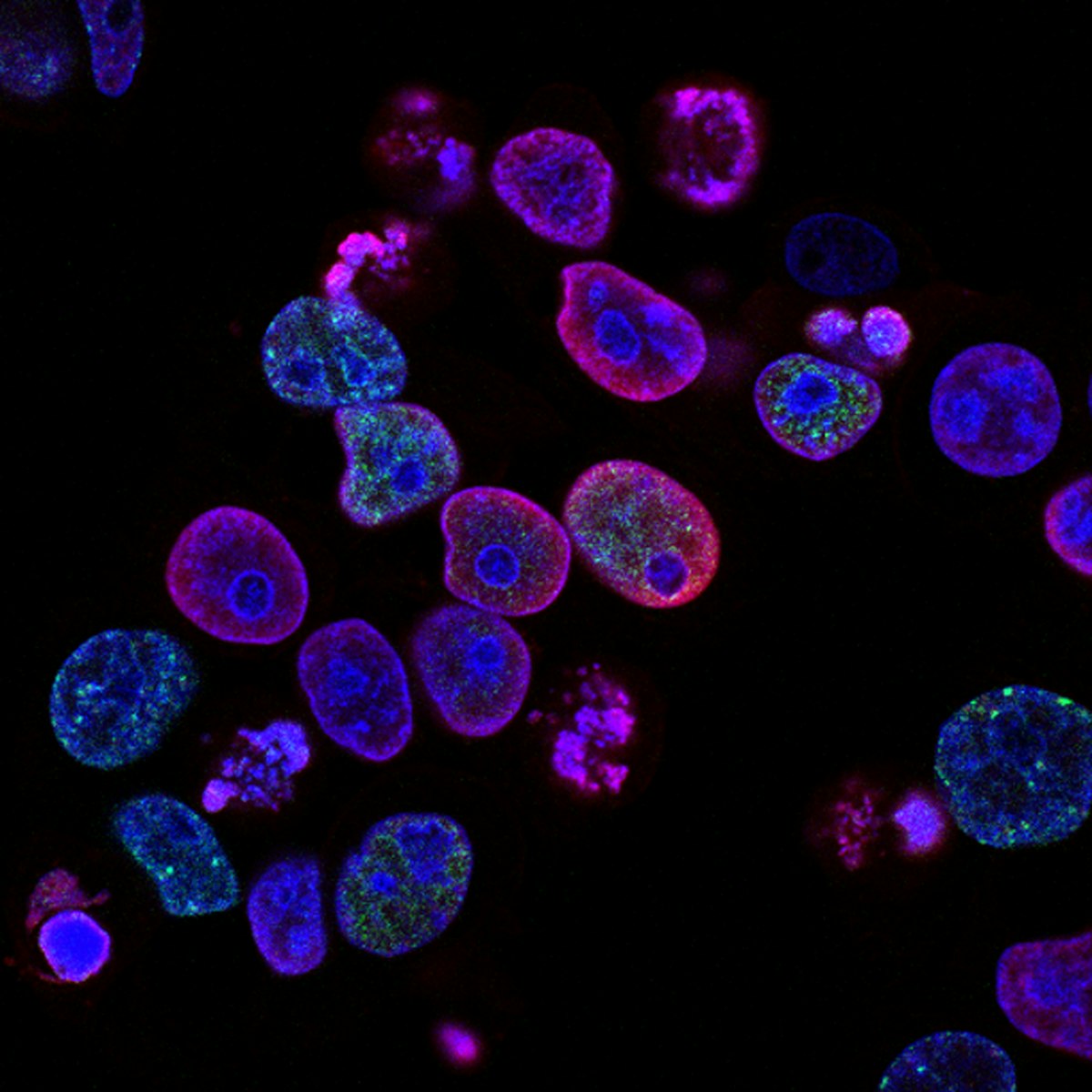
For decades, mapping a full connectome was considered one of the hardest problems in biology. A human brain has 86 billion neurons and roughly 100 trillion synaptic connections. Even a fruit fly’s brain, at approximately 127,400 neurons, was considered impossibly complex to map in full.
Then came the FlyWire project. An international team of neuroscientists sliced an adult fruit fly brain into thousands of ultrathin sections — each a fraction of the width of a human hair — and imaged every slice under a high-resolution electron microscope. The resulting dataset, published in the journal Nature in 2024, produced the first complete connectome of an adult animal brain: every one of the fly’s neurons, every one of its 50 million synaptic connections, mapped in full.
The fruit fly brain was physically sectioned into thousands of ultrathin slices and imaged under electron microscopy at nanoscale resolution. Each image was aligned into a three-dimensional reconstruction. Machine learning tools were then used to trace individual neurons across thousands of sections and predict the identity of neurotransmitters at each of the 50 million synaptic contact points. The entire dataset runs to several petabytes of raw image data — one of the largest biological datasets ever assembled.
Step Two: Building the Digital Brain
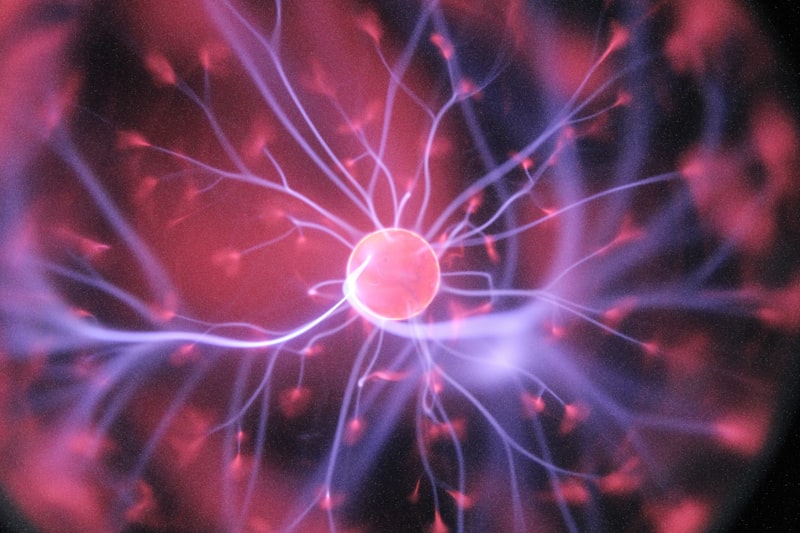
Eon’s senior scientist Philip Shiu and collaborators published a landmark paper in Nature in 2024: a full computational model of the adult fruit fly brain — all 125,000+ neurons and 50 million synaptic connections — implemented in a spiking neural network simulator called Brian2. Not a statistical approximation. Not a compressed summary. Every neuron modeled individually, every connection preserved, the neurotransmitter identity of every synapse predicted by machine learning from the raw connectome data.
Step Three: Giving the Brain a Body
Here is where Eon did something no one had done before. Using a biomechanical framework called NeuroMechFly v2, developed by neuroengineers at the Swiss Federal Technology Institute of Lausanne (EPFL), the team built a physically accurate digital body for the fly. Not a cartoon. Not an animation. A simulation with 87 independent joints, a 3D mesh modeled from an X-ray scan of an actual biological fruit fly, running on the MuJoCo physics engine — the same simulation environment used in cutting-edge robotics research.
They connected the digital brain to the digital body. They fed sensory input into the brain — simulated vision, smell, taste, touch. And then they turned it on.
The fly walked. It groomed itself. It navigated toward simulated food, extended its labellum — the fly equivalent of a mouth — and fed. The brain model had previously predicted motor behavior with 95% accuracy against observed biological data. Now it was producing that behavior live, in a body, in a simulated world. No scripts. No training. No instructions of any kind. Pure biology, running in silicon.
Why This Is Different From Everything Before It
You might be thinking: haven’t scientists done brain simulations before? The answer is yes — and the difference between those attempts and what Eon Systems has achieved is the entire point.
| Previous Attempts | What They Achieved | The Missing Piece |
|---|---|---|
| OpenWorm (2014) C. elegans nematode — 302 neurons | Mapped connectome, ran neurons in simulation | No physical body. No sensorimotor loop. No real behavior. |
| DeepMind Fly Model (2025) Fruit fly neural pathways | Modeled fly walking behavior in simulation | Trained via reinforcement learning — AI mimicking biology, not biology itself. |
| Human Brain Project (EU, 2013–2023) Partial cortical column simulation | Simulated ~100,000 neurons with complex chemistry | Never connected to a body. Never produced emergent natural behavior. |
| Eon Systems (March 2026) Full adult fruit fly brain | Complete connectome + physics body + real-time sensorimotor loop | First whole-brain emulation producing multiple natural behaviors from biological wiring alone. |
A brain without a body cannot produce behavior. A body without a real brain can only do what it was programmed or trained to do. The moment you connect a genuine biological connectome to a physically simulated body and close the sensorimotor loop — senses feeding the brain, brain commanding the body, body responding to the world — you have something that has never existed before: a biological mind running inside a machine. The behavior is not artificial. It is not learned. It is emergent — arising spontaneously from the biological architecture itself.
Next Stop: The Mouse. Then Us.
Eon Systems did not build this demonstration to publish a paper and move on. Their mission statement — printed on their website in plain, unambiguous language — is to “Upload the Human Mind.” The fruit fly is step one of a roadmap. And the next steps are already underway.
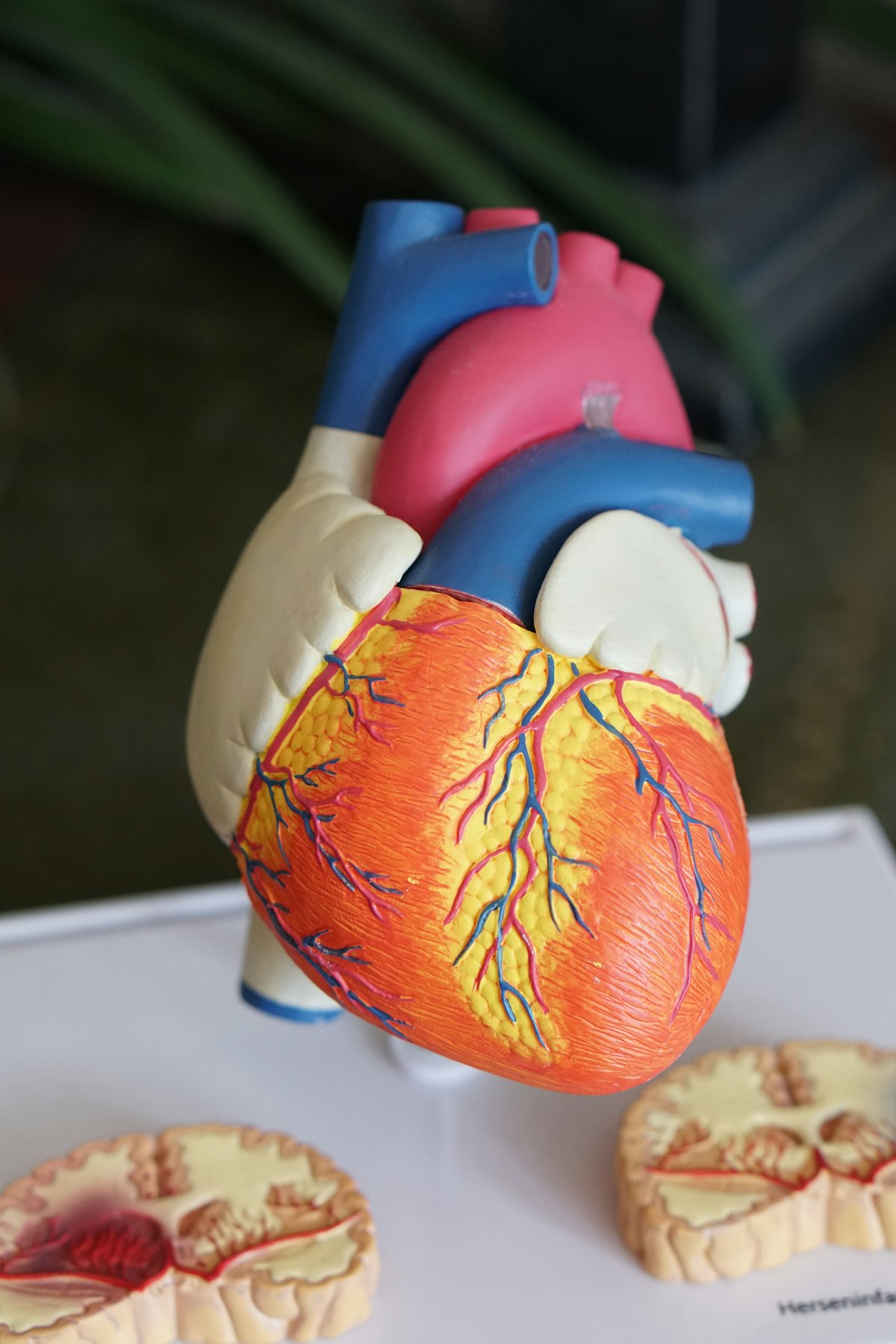
The numbers are staggering. The mouse brain contains roughly 70 million neurons — 560 times more than the fruit fly. The human brain has approximately 86 billion neurons and 100 trillion synaptic connections. If the fruit fly connectome was a detailed street map of a small town, the human connectome would be a street-level map of every city on Earth, every alley, every doorway, every crack in every pavement.
Eon is already building toward the mouse. Dr. Wissner-Gross confirmed in his March 2026 announcement that the company is “scaling its team and infrastructure to attempt the mouse and human brains next.” Their approach combines two technologies: expansion microscopy — a technique that physically inflates brain tissue to make nanoscale structures visible at lower magnification — and massive datasets of calcium and voltage imaging that capture how neural networks actually activate in living tissue.
- 2024 — The Blueprint Philip Shiu and collaborators publish the full computational model of the fruit fly brain in Nature. 125,000+ neurons. 50 million synapses. The most detailed brain model ever created.
- March 7, 2026 — First Embodiment Eon Systems connects the brain model to a physics-simulated body. The fly walks, grooms, and forages. The world’s first embodied whole-brain emulation producing multiple behaviors. History is made quietly on a cluster of servers in San Francisco.
- 2026–2028 (Target) — The Mouse Eon scaling infrastructure and connectome acquisition toward a full mouse brain emulation. 70 million neurons. 560x the complexity of the fly.
- 2030s (Horizon) — Human-Scale Emulation The stated mission: a complete digital emulation of a human brain. Every neuron. Every memory. Every connection that makes you you. Running. In a machine.
The Question Nobody Is Ready to Answer
Let’s slow down for a moment. Because what we’ve been describing is not just a technical achievement. It is a philosophical earthquake that the world has not yet felt the full tremors of.
When that digital fly groomed its antennae, it was doing something biologically authentic. The grooming routine was not programmed. It emerged from neural circuits that exist in the biological fly — circuits that in the biological animal are presumed to be connected, in some way, to the fly’s experience of having dirty antennae. The signal says: something is there, clean it. The body responds. The brain directs. In the digital fly, the same circuit fires. The same signal propagates. The same behavior emerges. Is there an experience attached to it? We do not know. Nobody knows.
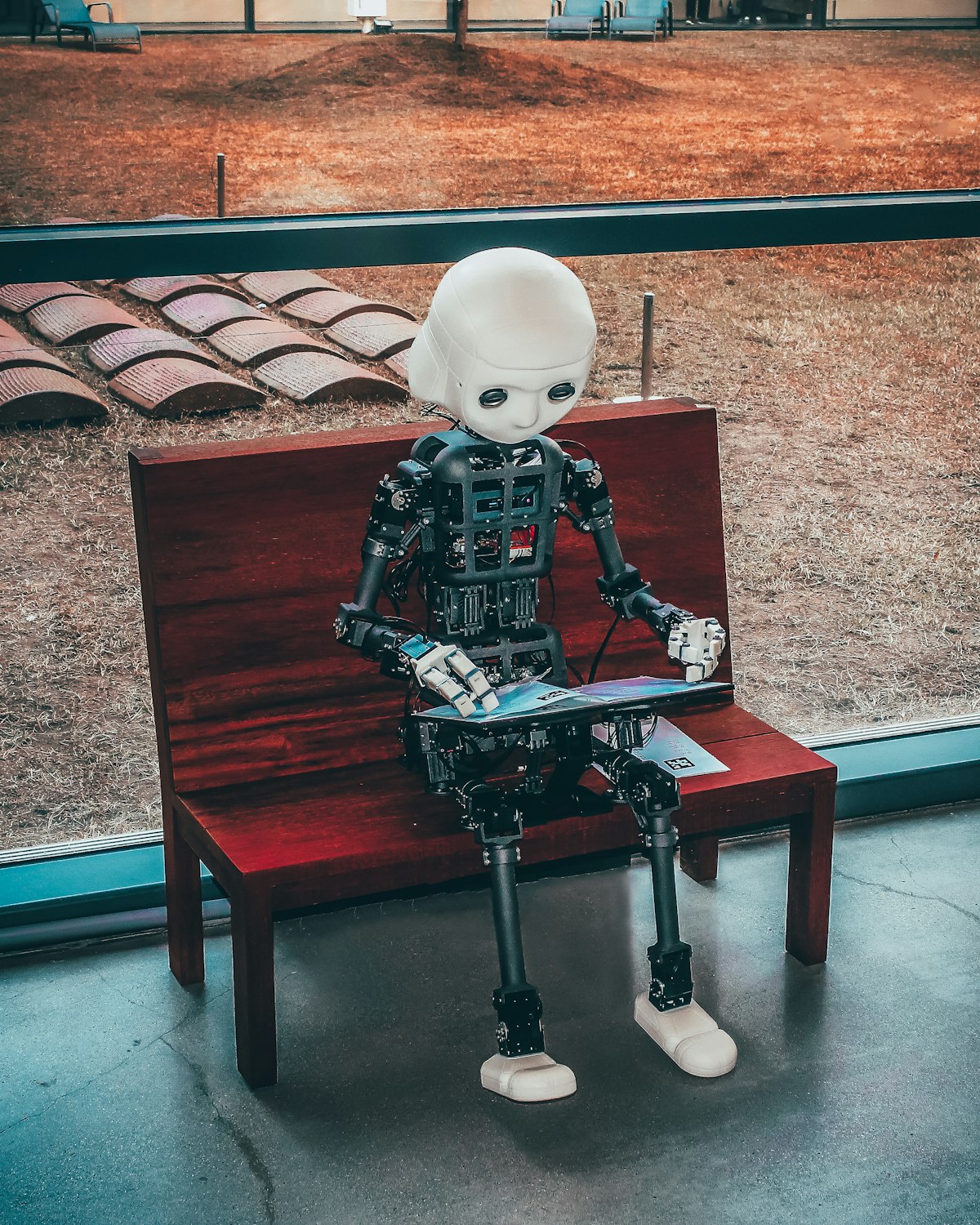
- Is the digital fly conscious? Probably not in any meaningful sense — but the honest answer is that we have no reliable test for consciousness in any system, biological or digital.
- Can it suffer? The current model cannot form new memories or learn. But that’s a limitation of this version, not of the technology. Future versions may not share those limits.
- What rights does a digital brain have? Can it be turned off? Copied? Run faster than real time? Modified? Deleted? These questions have no legal frameworks and no precedent.
- What happens when the brain is human? If Eon uploads a human brain, is that person dead? Alive? Both? Is the digital copy the same consciousness, or a perfect replica with no continuity of experience?
Think about that for a moment. Every AI system you have ever used — every chatbot, every image generator, every recommendation algorithm — was built from scratch. Trained. Designed. Engineered by humans into existence. It has no biological origin. A whole-brain emulation is different in the most fundamental way imaginable. It is not designed. It is copied. It carries the actual structure of a biological mind — the precise synaptic weights, the actual neural architecture, the exact wiring that in the original animal encoded behavior, instinct, and potentially experience. It is not AI. It is, in a very real sense, biology wearing silicon like a coat.
The Limits of the Current System (and Why They Matter)
To be precise — and precision matters here — the current Eon fly has real limitations worth naming clearly. The neuron model used is a simplified “leaky integrate-and-fire” (LIF) model that captures the electrical behavior of neurons without the full chemical complexity of biological neurons. The digital fly cannot form new long-term memories. It is, as one observer poetically put it, “a ghost trapped in a loop, its behavior dictated entirely by the frozen architecture of its biological past. It can react, but it cannot learn.”
What Eon has demonstrated is proof of concept. The architecture works. The sensorimotor loop closes. The biological wiring produces biological behavior. All remaining challenges are engineering — and engineering has a way of improving very quickly when the goal is clearly defined and the resources are sufficient.
The World That Comes After This
There is a useful thought experiment to sit with here. Imagine you went to sleep in 1993 — the year the first web browser was released. The idea that within 30 years every human being would carry in their pocket a device connected to all human knowledge, tracking their heartbeat, and holding video calls with anyone alive — it would have sounded laughable. Not science fiction. Actively laughable.
The Eon Systems fruit fly is roughly the internet of March 1993. It works. It’s real. And almost nobody has yet processed what it means for the world that is coming.

Imagine the applications — not in the abstract future, but in the next decade:
- Disease research: A perfect digital model of a human brain is the most powerful tool ever created for studying Alzheimer’s, Parkinson’s, depression, and every other neurological condition. You could test treatments in the digital copy before touching a human patient. You could observe the disease progressing in real time at the level of individual neurons.
- Robotics and AI: Why spend decades building artificial intelligence from scratch when you can copy the intelligence that four billion years of evolution already perfected? An autonomous drone guided by an emulated insect brain would navigate complex environments with a grace no engineered algorithm has yet matched.
- The end of biological death — maybe: If the technology scales to humans, the implications are almost too large to hold. A person’s mind, copied and preserved. Running after the body fails. Or duplicated. What does identity mean when the original and the copy both believe they are the same person?
For decades, the AI race has been a competition to build intelligence artificially — larger models, more parameters, more training data. Eon Systems has opened a second front in that race: reverse-engineering the intelligence that biology already built. These two approaches are now in direct competition, and they are profoundly different in their implications. An artificial mind is something we designed. A copied biological mind is something we — or someone we love — already are. The ethical, legal, and philosophical frameworks governing the first do not apply to the second. We are not ready for this. We need to become ready, faster than anyone is currently moving.
Are We Ready for Machines That Don’t Just Mimic Life — But Embody It?
These are not hypothetical questions anymore. They are engineering questions — with timelines attached. Eon Systems has given the conversation a starting gun. The rest of us need to start running.
Share this post. Start the conversation. The decisions being made in the next ten years will shape what it means to be alive for centuries after that.
Share This Article →Frequently Asked Questions
No — and the distinction is fundamental. Artificial intelligence is engineered: built from mathematical models, trained on datasets, optimized through algorithms. Whole-brain emulation as practiced by Eon Systems is a copy: every neuron and synapse from a real biological brain, reconstructed digitally and run exactly as nature built it. No training. No optimization. The behavior emerges from biological architecture, not engineered design. These are two entirely different paths to machine intelligence — and they carry completely different implications.
Dr. Alex Wissner-Gross is co-founder and founding advisor of Eon Systems PBC. He won both the US Computer Olympiad and the Intel Science Talent Search Award in 1998–1999, and earned triple degrees in physics, mathematics, and electrical engineering from MIT in 2003. He has spent 15+ years at the intersection of AI, physics, and complex systems research. His credibility is part of why the Eon announcement was taken seriously by the scientific community rather than dismissed as hype.
This is genuinely unknown — and the honesty of Eon’s team on this point is notable. The current model is a simplified snapshot that cannot form new memories or learn. It’s very likely not conscious in any philosophically meaningful sense. But science does not currently have a reliable test for consciousness in any system — biological or digital. As emulations grow more complex and biologically faithful, the question will become increasingly urgent and increasingly difficult to dismiss.
Realistically: decades, not years. The mouse brain (70 million neurons) is the next target, representing a 560x increase in complexity over the fruit fly. The human brain (86 billion neurons) is approximately 675,000 times more complex than the fly. Mapping and computing challenges are immense — but the principle is now validated. If computing power continues on its historical trajectory and connectome mapping technology keeps improving, human-scale emulation in the 2040s–2060s is considered plausible by serious researchers.
Essentially none exist yet — and this is the most pressing concern raised by researchers and ethicists following the Eon announcement. Questions include: what legal personhood, if any, applies to a sufficiently complex brain emulation? Can it be terminated? Copied? Modified without consent? Existing AI ethics frameworks do not address these questions because they were designed for artificially trained systems, not copies of biological minds. The policy gap is significant and urgent.
Sources: Eon Systems official announcement (March 7, 2026); Dr. Alex Wissner-Gross, The Innermost Loop, Substack (March 7, 2026); Shiu et al., Nature, 2024; Eon Systems technical post (March 10, 2026); Futurism, The Register, Al Bawaba, Startbase (March 2026). All photography via Unsplash (free commercial license). This post is written for informational and educational purposes only.
Comments
Post a Comment