
These are not predictions. They are not experiments still in a lab. They happened. In 2026. And most people have no idea.
The Year Science Stopped Being Science Fiction
There’s a strange thing that happens when real scientific breakthroughs occur. The discovery gets published in a journal, makes a few headlines for 48 hours, and then vanishes into the news cycle as if it never happened. Life carries on. People scroll past it. And the full weight of what just occurred — the absolute, jaw-dropping magnitude of what humanity just figured out how to do — lands on almost nobody.
This post is my attempt to fix that. At least for this moment.
Because what happened in the first four months of 2026 deserves to be read slowly. Carefully. With the kind of attention usually reserved for things that change your life. Because these things might actually change yours — or the lives of your children, your parents, the people you love who are sick right now and don’t know why.
Last month, we covered the story of Eon Systems, who copied an entire biological brain neuron by neuron into a computer — and it woke up and walked. If that story unsettled you, hold on. Because the stories in today’s post are, if anything, more personal. More urgent. More impossible-sounding — and more completely, verifiably real.
Let’s talk about a baby named KJ. A team of printed neurons. And a blood test that could quietly save millions of lives — starting with yours.
His name is KJ Muldoon. And when he was born, the doctors who delivered him already knew he might not survive his first year.
KJ came into the world carrying a mutation in a single gene — a gene that most people have never heard of, because it almost never fails. The gene is called CPS1. It encodes an enzyme responsible for processing ammonia in the liver. When it doesn’t work, ammonia builds up in the blood. And ammonia, in sufficient concentrations, destroys the brain.
The condition is called severe carbamoyl phosphate synthetase 1 deficiency. It is extraordinarily rare, affecting fewer than 1 in 1.3 million births. There was, before KJ, no cure. There was no approved treatment. There was a liver transplant — which for an infant carries its own catastrophic risks — or there was palliative care. Management. Hope that the restrictions would hold long enough for the child to grow stronger.

His parents, Kyle and Nicole Muldoon, were told about the condition in the first days of their son’s life. They watched him spend his first months in the hospital, on a diet so restricted it would be unrecognizable as food. They hoped. They prayed. And they said yes to something that had never been done before.
Six Months, One Child, One Therapy Built for Nobody Else on Earth
A team at Children’s Hospital of Philadelphia (CHOP) and Penn Medicine decided to try something that exists at the very outer edge of what medicine currently knows how to do. They built KJ a personalized CRISPR gene therapy. Not a therapy designed for CPS1 deficiency in general. Not a therapy designed for a group of patients. A therapy designed for one specific mutation, in one specific child, in one specific liver.
They did it in six months.
CRISPR is a molecular tool borrowed from bacteria that can find a specific sequence of DNA inside a living cell and change it — precisely, reliably, like a find-and-replace function in a document. In KJ’s case, the team used it to correct the specific mutation in his CPS1 gene, targeting only his liver cells. The changes are permanent and do not pass to future generations.
The therapy was administered to KJ in February 2025, when he was between six and seven months old. By February 25, 2026 — one year later — KJ had achieved meaningful clinical improvements, including walking and talking, as he continued to grow and thrive.
Walking. And talking.
A child who, without this therapy, may have suffered severe neurological damage or not survived his infancy, was taking steps across a room and forming words. Because a team of doctors and scientists spent six months writing a treatment that had never existed, for a mutation that affects fewer than a hundred people alive on Earth at any given time.
Why This Is Bigger Than One Baby
The medical achievement here is not just the therapy itself. It’s the precedent. It’s the proof of concept. It’s the answer to a question that has defined medicine’s limitations for centuries: what do you do when someone’s disease is too rare for the pharmaceutical system to address?
The traditional drug development model requires years of trials, hundreds of millions of dollars, and patient populations large enough to power statistical significance. For a disease that affects fewer than a hundred people on Earth, that model simply doesn’t work. It never did. Those patients just fell through the cracks and were told there was nothing that could be done.
CHOP researchers are now pursuing clinical trials in Philadelphia to test gene-editing methods on a larger number of children with rare metabolic disorders. These conditions are caused by variations in seven genes that can be corrected using the same type of gene editing applied in KJ’s therapy. The methodology is designed to be scaled — meaning the same platform that saved KJ could, with variation, be turned around for the next child with a different mutation in a different gene in a matter of months, not years.
Think about what that means. Right now, there are over 7,000 known rare diseases. Fewer than 5% have any approved treatment. We are talking about millions of children, millions of families, sitting in hospitals with diagnoses that might as well be death sentences. If the CRISPR personalized therapy platform scales — and the early signals suggest it will — the word “incurable” is going to start meaning something very different.

Let’s talk about a different kind of breakthrough. Not a miracle for one child. A potential revolution for every person alive — and every person who will ever need a brain implant, a prosthetic limb, a hearing device, a vision aid, or a cure for a degenerative neurological disease.
On April 15, 2026, engineers at Northwestern University announced something that sounds, on first hearing, like it belongs in a science fiction novel from fifteen years ago.
They printed artificial neurons. And those neurons had a conversation with real ones.

What They Actually Built
The device is made from a material called molybdenum disulfide — MoS2. It’s a semiconductor that can be dissolved into an ink and printed onto a flexible polymer substrate using an aerosol jet printer. The result is not a rigid silicon chip. It’s a soft, bendable device that you could, in principle, press against living tissue without the mechanical mismatch that has always been the fundamental problem with brain-machine interfaces.
The team, led by Professor Mark C. Hersam at Northwestern’s McCormick School of Engineering, built these printed devices to function as spiking neurons — meaning they generate electrical pulses that mimic the characteristic signal pattern of biological neurons, called action potentials. Not a rough approximation. Not something ballpark. The artificial voltage spikes matched key biological features, including timing and duration of living neuron voltage spikes.
Biological neurons communicate through precisely timed electrical pulses. The exact shape of that pulse — its rise, its peak, its fall, its timing — is not noise. It is information. Previous artificial neurons fired too slowly, or produced signals with the wrong waveform shape, meaning real neurons didn’t recognize them as legitimate input. Northwestern’s devices generate spikes that are both the right timescale AND the right shape. That’s the breakthrough.
The Moment the Real Brain Responded
Here is where the story becomes genuinely astonishing. To verify that their artificial neurons could interface with real biology, Hersam’s team collaborated with neurobiology professor Indira M. Raman. Her team took slices of mouse cerebellum — living brain tissue — and applied electrical signals from the printed artificial neurons directly to the tissue.
The living neurons fired.
They responded to the artificial signals as if they were coming from a biological peer. “You can see the living neurons respond to our artificial neuron,” said Hersam. “We’ve demonstrated signals that are not only the right timescale but also the right spike shape to interact directly with living neurons.”


The Energy Problem Nobody’s Talking About (But Should Be)
There is a second strand to this story that is less emotionally dramatic but perhaps even more consequential in the long run.
Artificial intelligence is eating the world’s energy supply. “To meet the energy demands of AI, tech companies are building gigawatt data centers powered by dedicated nuclear power plants,” said Hersam. The model is unsustainable. Training a single large language model can consume as much electricity as a small town uses in a month. And the models are only getting larger.
The human brain, by comparison, runs on roughly 20 watts. The same power as a dim light bulb. The brain is five orders of magnitude more energy-efficient than a digital computer. That is not a small gap. That is a chasm so wide it represents one of the defining engineering challenges of the next century.
Neuromorphic hardware — computing systems that mimic the brain’s architecture rather than traditional transistor-based chips — has been an active research field for decades. Northwestern’s printed neurons are a potential building block for this kind of hardware: heterogeneous, dynamic, biologically realistic, and crucially, manufacturable at low cost using printing rather than clean-room silicon fabrication. If this scales, the energy economics of AI could change dramatically.
Where This Is Heading
The near-term applications are both medical and computational. On the medical side: brain-machine interfaces that speak the brain’s native language, rather than shouting at it in a foreign dialect. Cochlear implants that work better. Retinal prosthetics that produce more natural visual signals. Neural interfaces for people with paralysis that don’t trigger immune rejection because they’re soft and biocompatible rather than hard and rigid.
And further out: the possibility of computing architectures that are not just brain-inspired in the loose metaphorical way that today’s “neural networks” are brain-inspired — but brain-like in a deep, physical, energetic sense. Computers that think the way biology thinks. Using a fraction of the power.
This one I want you to read as if it could be about you. Or your mother. Or your husband. Or the friend who has been tired lately and can’t figure out why.
Because it might be about them. And what you’re about to read might be the difference between a cancer that is caught early — when it is curable — and one that isn’t caught until it is Stage IV and options are running out.

The Problem With How We Find Cancer Today
Here is a number worth knowing: approximately 71% of cancer deaths in the United States come from cancers that currently have no recommended routine screening. No mammogram for those cancers. No colonoscopy. No PSA test. Nothing. You wait. You wait until you feel a lump, or notice a change, or experience pain — and by that point, the cancer has often been growing, silently and undetected, for months or years.
Pancreatic cancer is discovered at Stage IV in the majority of cases. Ovarian cancer kills over 14,000 Americans annually, largely because it is diagnosed too late. Lung cancer, even in smokers who theoretically qualify for CT screening, often goes unchecked until symptoms emerge. The system we currently have is not early detection. It’s late rescue. And it fails millions of people every year.
Of the more than 50 cancer types the Galleri test can detect, 47 of them currently have no recommended screening programme in the United Kingdom. This is not a gap. It is a canyon. Millions of people are walking around right now with early-stage cancers that a standard check-up will not find — because no standard check-up is designed to look for them.
How the Galleri Test Works
Cancerous cells are leaky. As a tumour grows, it sheds fragments of its DNA into the surrounding blood vessels. These fragments — called cell-free DNA, or cfDNA — circulate in the bloodstream and carry chemical signatures called methylation patterns that are distinctive to cancer tissue. More than that: the methylation pattern changes depending on which tissue or organ the cancer is growing in.
The Galleri test, developed by the US biotech company GRAIL, isolates these fragments from a blood sample and analyses their methylation patterns using machine learning. It doesn’t just tell you that a cancer signal is present. In 85% of cases where it detects cancer, it correctly identifies the original site of the cancer — meaning doctors know not just that something is wrong, but where to look.

The NHS Trial: 140,000 People. Years of Data. Results Expected Now.
In 2021, the NHS partnered with GRAIL to run the world’s largest clinical trial of a multi-cancer early detection test. The NHS-Galleri trial recruited 140,000 volunteers between the ages of 50 and 77, with no prior cancer diagnosis, across eight areas of England. Each participant gave annual blood samples for three years.
The results of the NHS-Galleri Screening trial are expected in 2026. This is one of the most anticipated medical data releases in recent history. Not because it will be surprising — earlier studies have already shown the test works. But because 140,000 participants followed over three years will provide the most statistically powerful evidence yet that early detection at population scale is feasible, safe, and life-saving.
What the Numbers Already Tell Us
An earlier NHS trial called SYMPLIFY enrolled over 6,000 patients referred by GPs with suspected cancer symptoms. The Galleri test correctly identified two out of every three cancers in those patients — and accurately identified the site of origin in 85% of cases.
Two out of three. In a group of people whose symptoms hadn’t yet led to a diagnosis through standard care. That is not a marginal improvement. That is a transformation in how early we can find the cancers that currently kill people by the hundreds of thousands because we find them too late.
The Question You’re Probably Asking Right Now
“Can I get this test?”
In the UK: not yet outside of clinical trials, pending the 2026 results and regulatory approval process. In the US: Galleri is available commercially right now for adults over 50, though it is not yet FDA-approved and is not typically covered by insurance. The cost is currently around $949 out of pocket.
That will change. If the NHS trial results confirm what the earlier data suggests, the regulatory and reimbursement landscape will shift fast. This is a test whose time has come — and the only question is how quickly the systems around it can move to catch up with what the science already knows.
What These Three Stories Have in Common
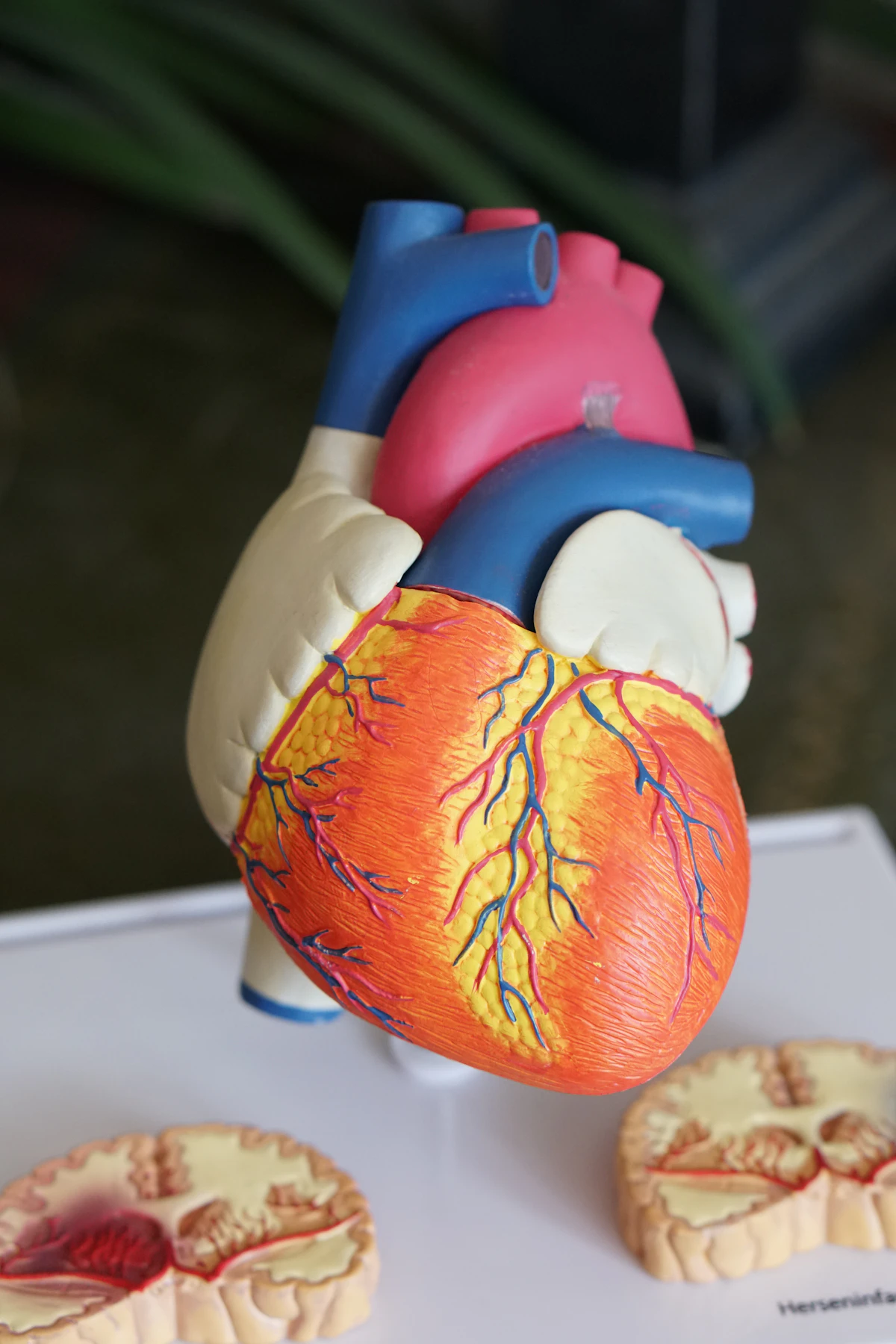
A baby’s DNA rewritten in six months. Artificial neurons speaking to living brain cells. A blood test that scans for 50 cancers at once. These are three stories from three different fields. But they share something that is worth naming explicitly.
They all represent the collapse of a barrier that medicine has spent decades trying to breach. The barrier between understanding biology and controlling it.
CRISPR says: we understand the language of your DNA well enough to correct a single sentence in a three-billion-letter text. Northwestern’s neurons say: we understand the electrical dialect of your nervous system well enough to speak it back to you, from a device we printed with an ink cartridge. The Galleri test says: we understand the molecular fingerprints of cancer well enough to find them in your blood before your body notices anything is wrong.
These are not three isolated events. They are three points on the same curve — a curve that is accelerating.
The convergence of CRISPR gene editing, brain-machine interfaces, and multi-cancer liquid biopsy represents a fundamental shift in medicine’s relationship with the human body. We are moving from a paradigm of treatment — intervening after disease appears — to a paradigm of interception and correction: catching disease before it manifests, rewriting the genetic errors that cause it, and building hardware that integrates directly with biological tissue. The children born in 2026 may live in a world where “incurable” is a historical term, and where a single annual blood draw is the primary line of defence against cancer. We are not there yet. But for the first time in history, we can see the path clearly enough to know it exists.
A Timeline of Impossible Things Becoming Possible
- February 2025 — KJ Receives His TherapyA baby with a fatal metabolic disorder receives the world’s first personalized CRISPR therapy, built in 6 months specifically for his mutation. There is no playbook. No precedent. Just science moving faster than anyone thought possible.
- February 2026 — One Year LaterKJ Muldoon is walking and talking. His parents stand in front of lawmakers in Washington and say: “We want every child facing a rare condition to have this same chance.”
- April 15, 2026 — Neurons Talk to a BrainNorthwestern University announces printed artificial neurons have successfully triggered responses in living mouse brain tissue. The signal was indistinguishable from a biological one. Brain-machine interfaces will never be the same.
- 2026 (ongoing) — The Galleri ResultsThe NHS-Galleri trial results — from 140,000 participants followed for 3 years — are expected to publish. The data will determine whether a single annual blood test becomes standard cancer screening for every adult on Earth.
- 2027–2030 (near horizon) — ScalePersonalized CRISPR therapies for seven more rare metabolic disorders enter clinical trials. Printed neuron devices enter first human trials for prosthetic hearing and vision. Galleri or equivalent tests begin reimbursement coverage in the US and UK pending FDA and MHRA approval.
Frequently Asked Questions
Not yet for most conditions. KJ’s therapy was custom-built for his specific mutation. The methodology is designed to scale, and clinical trials for seven additional rare metabolic disorders are being planned at CHOP. The regulatory pathway for “platform therapies” — where the delivery mechanism is approved once and the genetic payload is customized per patient — is actively being discussed with the FDA. This approach could dramatically reduce the time and cost of reaching approval for each new condition.
Not yet — the current research has been demonstrated in mouse brain tissue slices, not in a living patient. The next steps involve testing in live animals, followed by safety studies, before any human trials could begin. The path to clinical use typically takes 5–10 years from a preclinical breakthrough of this kind. However, the foundational barrier — demonstrating that printed artificial neurons can communicate with living biological neurons — has now been cleared. Everything from here is engineering and safety validation, not fundamental science.
In the United States, Galleri is available commercially for adults 50 and older at a cost of approximately $949. It is not FDA-approved and not typically covered by insurance, meaning it is out of pocket. In the UK, it is not available outside of clinical trials pending the 2026 NHS-Galleri trial results. If you are over 50 and concerned about your cancer risk, it is worth discussing with your doctor whether this test makes sense for your situation. GRAIL also offers a subscription option for annual testing.
No test is perfect, and Galleri is no exception. The false positive rate — the likelihood of a positive result that turns out not to be cancer — is approximately 0.5% in asymptomatic populations, meaning it is relatively low. When it does detect a positive cancer signal, the positive predictive value (likelihood of actual cancer) has been measured at around 61.6% in the Pathfinder 2 trial — meaning roughly 4 in 10 positive results require further investigation and turn out not to be cancer. This is meaningfully better than many existing screening tests. The SYMPLIFY study in symptomatic patients showed the test correctly identifies two in three cancers that were later confirmed by standard diagnostic methods.
They are different technologies but they share a fundamental thread: the human body, specifically the brain and the genome, is being decoded faster than at any point in history. Eon Systems demonstrated that a biological brain’s neural wiring can be copied and run in a computer. Northwestern demonstrated that artificial hardware can speak the electrical language of living neurons. CRISPR demonstrated that the genome’s instructions can be edited at the level of individual letters. These are three separate advances converging toward the same broad frontier: the complete understanding and control of biology at the molecular and cellular level.
The Science Is Moving. Are You Paying Attention?
Share this post with someone who needs to read it. A parent of a child with a rare diagnosis. A friend who’s been putting off a health check. Anyone who thinks science is moving slowly. It isn’t. It’s sprinting.
Share This Post →Sources & citations: Children’s Hospital of Philadelphia / Penn Medicine (February 2026); Northwestern University press release & Nature Nanotechnology (April 15, 2026); ScienceDaily (April 18, 2026); Singularity Hub (April 20, 2026); Neuroscience News (April 2026); NHS-Galleri Trial, Cancer Research UK, NIHR, University of Oxford SYMPLIFY study; GRAIL Inc. Pathfinder 2 trial data. All photography via Unsplash (free commercial license — no attribution required). This post is for informational purposes only and does not constitute medical advice. Consult a licensed healthcare provider before making any health decisions.
Nice information i really feel blessed after knowing about this kind of progress in science
ReplyDelete